BIOLOOM Speaks Up in the Council Chamber: Discussing Nature-related Risks and Socio-Ecological Resilience
BIOLOOM joins an expert panel in the Tower Hamlets council chamber, after the first screening of the People’s Emergency Briefing to the local government.
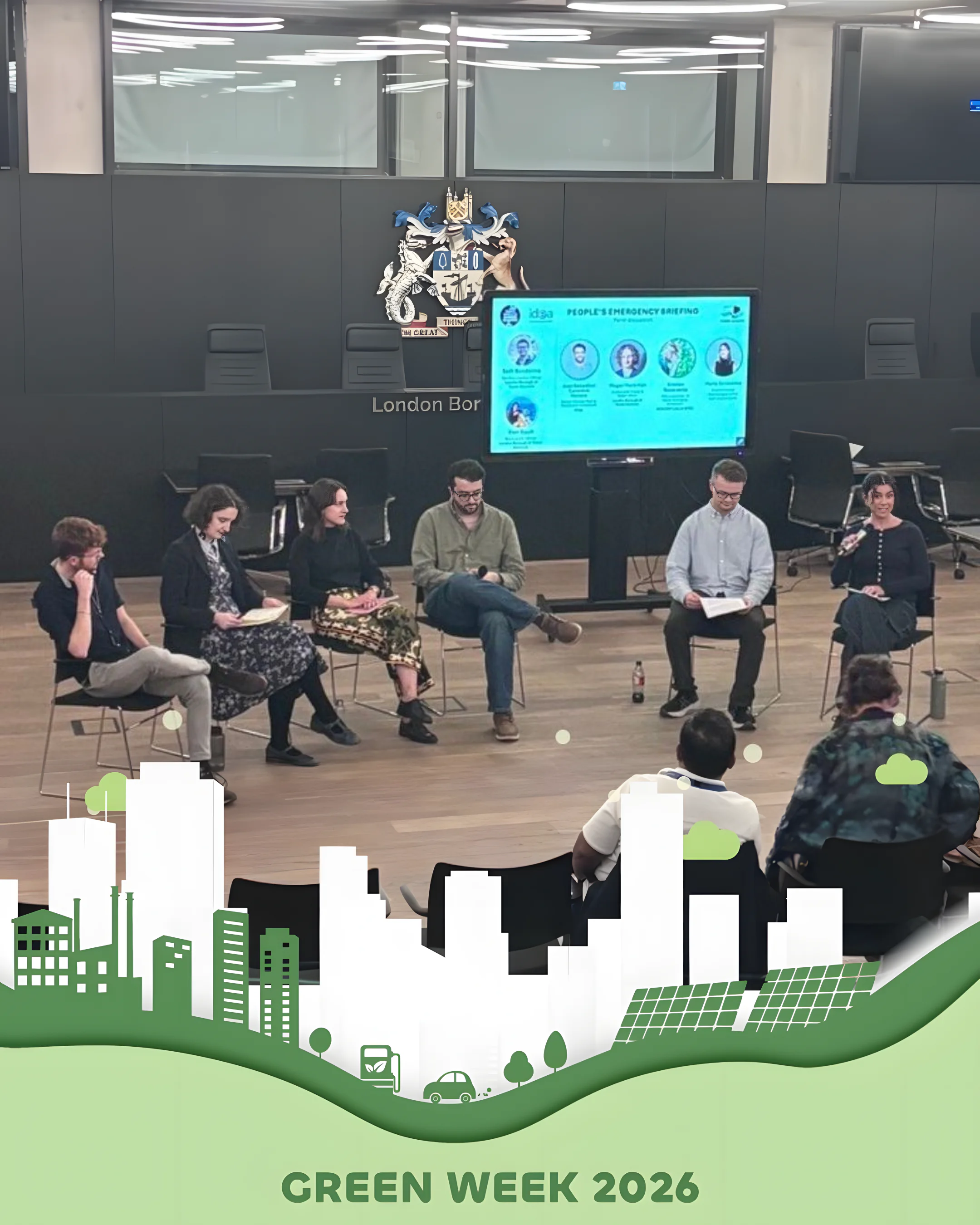
This October, BIOLOOM was represented in the local council chamber of Tower Hamlets as I was invited to take part in an expert panel following the first screening of the People’s Emergency Briefing to our university’s local government.
As a brief introduction, this kind of event, which is now reaching 5,000 grass-roots screenings being shown in churches, councils, and backyards alike, stemmed from the UK’s National Emergency Briefing in late 2025. That original event was a briefing to >1,200 MPs, business and faith leaders in Westminster. It represents, in my view, an unprecedented historic milestone in which some of the UK’s top scientists, forecasters and military professionals –experts on risk, climate, economy, nature breakdown, and national security– outlined in no uncertain terms that the risks to our nation (as with others) are escalating with too little response. The People’s Emergency Briefing is the accessible film and discussion version of this event that is taking the UK (and now other countries) by storm. This has coincided with a historic drought year for England, along with reports from top insurers, warnings from a consortium of farmers and grocers, assessments of MI5 and 6, and other arms of the UK government driving toward the same conclusion. The accelerating and un-countered risk of collapsing food supply, water supply, social order, insurance, economy, and way of life is hitting centre stage.
Including ecology’s own highly influential Oxford professor Nathalie Seddon (and one of the more fun of my old lecturers) stating clearly that the nature crisis risks we are facing could eliminate the possibility of the economy at all, as it is currently understood. The Briefing phenomenon is now being replicated in ten other countries, whose own top experts are coming together to issue the same warnings. And I imagine that this number will only grow.
I don’t take it lightly, and feel more responsibility than honour to speak in the council chamber on such a topic. Alongside other panellist experts in infrastructure resilience (Juan Sebastián Cañavera Herrera), water systems (Megan Monkman), and environmental psychology (Marta Saniewska); the discussion was incredible. The kind of discussion that only could have happened on such a stage in 2026. And we brought a distinctly BIOLOOM perspective to the conversation.
Our lab group is all about emphasising the interconnections between humans and nature, and my PhD research in particular confronts the consequences of ecological breakdown on people’s lives and society at large; socio-ecological breakdown. Including how nature loss can compromise our food, medicine, materials, and much more.
So, BIOLOOM brought to the council chamber a reminder that this predicament is not a climate crisis, but a polycrisis of interacting factors that spans from socio- to ecological. From soil depletion, to democratic slide, to biodiversity loss, to fraying social cohesion, perceptions of nature, and trust. There was an enormously positive reception to this thinking during the panel and in discussions afterward with government workers in the audience. We then spoke about food security for a central London borough; even more prescient now as London’s reservoirs are still under projected filling rates. Emphasising the importance of decentralised food production, restoration of integrated agroecological landscapes that form soil rather than deplete it, and prioritising ‘polysolutions’ to a polycrisis.
For sure, the mood has shifted: every question in the chamber was about food, water and safety rather than GDP. We discussed how the housing development of a greenspace in our very-green-limited home may well have been viable in previous decades, but is simply not strategic in this new era where our actions, perceptions, and values must expand into the wider systems that our predecessors have been neglecting. I introduced a reminder that we are truly living in a socio-ecological system, not a stand-alone society, which requires totally different management techniques, priorities and perhaps totally different frames of mind. Co-panellist, Juan, captured and furthered the concept: “We are also living currently a morality crisis. We need to review our values and the way we interrelate with other humans and non-humans.”
Undoubtedly, my lifetime will be a period of enormous and difficult to predict change – both positive and negative. I feel it is important, and increasingly mainstream, to say that. One thing I feel I can predict is that centralising how interwoven our lives are with the human and ecological world around us (and then acting accordingly) will be an inevitable part of our future, as well as an incredible tool for managing these risks and upholding good lives. And that’s what BIOLOOM is all about.
It was an amazing space, full of so much concern and yet so much hope. And, to me, most energising was the newness of the atmosphere. Discussions about catastrophic risks to human way of life that I could never have had before, being spoken through stubborn smiles and kind eyes. In a council chamber no less. Despite such a sombre topic, I could not help but to feel ecstatic on the tube ride home. Something is shifting this year, minds are changing – change is on its way.
Until next time, Kristian.